

 30-day fit & satisfaction support

Does Fidgeting Actually Help You Focus?
For a long time, fidgeting was treated as the enemy of focus. Tap your pen, bounce your leg, or twist a paperclip, and someone would tell you to sit still and pay attention. Teachers asked for quiet hands. Parents asked for still bodies. And anyone who could not stop moving was made to feel like they were doing focus wrong.
But the science tells a different story. A growing body of research suggests that for many people, especially those who struggle with attention, fidgeting is not a distraction. It is a tool the brain uses to stay engaged. The restless hands and tapping feet might actually be what is keeping the mind on task.
This article looks at what the research actually says about fidgeting and focus, and why it might be time to rethink the idea that sitting still is the only way to pay attention.
The Restless Body Is Not the Enemy
Think about the last time you had to listen to something long and repetitive. A long meeting, a slow lecture, a phone call on hold. Chances are your hands found something to do. You doodled, tapped, spun a pen, or fiddled with a ring.
That urge is not a failure of attention. It is a sign your brain is trying to keep itself awake and engaged. When a task does not provide enough stimulation on its own, the body generates a little extra movement to make up the difference. In other words, fidgeting is often the brain's way of staying online, not checking out.
This is especially true for people whose baseline level of stimulation is a bit higher than average, a group that includes many people with ADHD. For them, sitting perfectly still can actually make focus harder, because a still body and a bored brain start to drift.
What the Research Says
The idea that movement can support attention is not just a nice theory. It shows up in real studies.
One of the most cited findings comes from a 2009 study on doodling and memory by psychologist Jackie Andrade. In the experiment, people listened to a dull recorded message while either doodling or sitting still. When they were tested afterward, the people who doodled recalled nearly thirty percent more of the message than those who did not. The simple act of keeping the hands busy helped the mind hold on to more information.
The same pattern shows up in newer research on ADHD. A 2024 study published in Frontiers in Psychiatry found that fidgeting may support sustained attention in adults with ADHD, with more movement recorded during correct responses and better overall performance. The researchers concluded that, for some adults, fidgeting is not a distraction but part of how the brain holds attention during demanding tasks.
Other work points in the same direction. Research into tactile manipulation, the kind of repetitive hand movement you get from squeezing or rolling something, suggests it can lower feelings of stress and help some people feel more grounded and present. When the body is a little less activated by anxiety, the mind has an easier time staying on the thing in front of it.
It is also worth being honest about what does not always work. A 2022 review of fidget toys in classrooms found the evidence for specific toys is mixed. A fidget that becomes its own distraction, or one that makes noise and pulls attention, stops helping. What tends to support focus is movement that is quiet, repetitive, and low effort, not a flashy object competing for attention.
Why Movement and Focus Are Linked
So why would moving your hands help your brain pay attention? The answer has a lot to do with stimulation.

The brain has an ideal zone of arousal, a level of alertness where focus works best. If a task is too boring, the brain drops below that zone and attention falls apart. If a task is too overwhelming, the brain rises above it and feels flooded. Movement is one of the ways the brain adjusts its own arousal level, nudging itself back into that middle zone where focus is possible.
For someone who is under stimulated, fidgeting adds just enough input to bring the brain back online. For someone who is anxious or overstimulated, a repetitive physical movement can have a soothing, grounding effect that helps them settle. Either way, the movement is doing a job. It is regulating attention, not breaking it.
Not All Fidgeting Is the Same
It is worth being honest about one thing. Not every kind of movement helps in every situation, and some fidgeting can be genuinely disruptive to the people around it.
The difference often comes down to two things: whether the movement is repetitive and low effort, and whether it is quiet. Small, steady movements, like squeezing, tracing, or rubbing, tend to support focus without demanding much from the brain. They run quietly in the background, giving the body something to do while the mind stays on the main task.
Larger, more varied movements, or movements that make noise or pull other people's attention, are a different story. A bouncing leg under a desk can help the person doing it, but a pen clicked loudly enough to bother the whole room becomes a different problem. The goal is not to encourage all movement everywhere. It is to find the kind of movement that helps without getting in the way.
How to Fidget in a Way That Helps
If fidgeting helps you focus, the useful question is not how to stop it, but how to do it well. The best fidgeting is steady, quiet, and hands only, something your body can do without your mind having to think about it.
A soft object to squeeze, a textured surface to trace, or even a simple doodle in the margin can all do the job. The key is that the movement gives your body the input it needs while leaving your eyes and ears free for the actual task.
It also helps to notice when fidgeting is supporting you and when it is becoming a habit you reach for out of boredom rather than need. Fidgeting works best as a regulator. When it turns into something that pulls your attention away from what you are doing, it has stopped doing its job.
When Fidgeting Helps Most
Fidgeting is not equally useful in every moment. It tends to matter most in situations that are long, passive, or low in stimulation.
Listening to a talk, sitting in a meeting, watching a training video, studying for an exam, or waiting in a long line are all classic moments where the mind starts to wander. These are also the moments where a quiet fidget can make the biggest difference, because it gives the brain just enough to hold onto.
During a fast paced, hands on activity, fidgeting matters less. You are already stimulated and moving. The value of a fidget shows up in the still, quiet moments, which is exactly when focus is hardest to maintain.
Why Built-In Fidgets Beat a Separate Toy
The mixed evidence on fidget toys points to a simple idea. It is not the fidgeting itself that fails. It is everything that comes with carrying a separate tool.
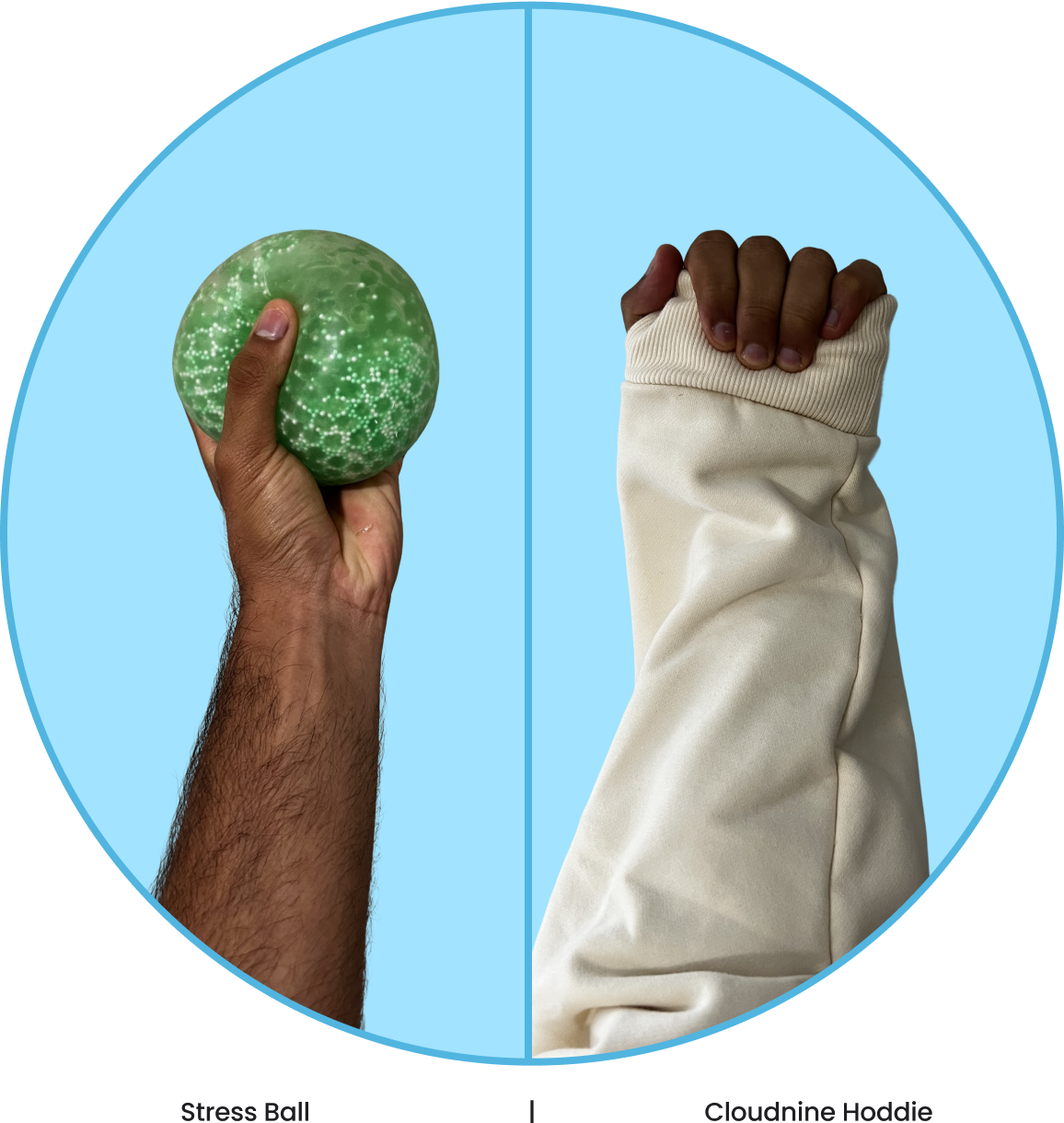
A toy you have to remember to bring is a tool you will forget on the day you need it most. A toy that lives in a bag gets lost, left at home, or taken away in class. A bright, clicky gadget announces itself to everyone in the room, which for a lot of people is the exact opposite of what they want from a calming tool.
What the research actually supports is movement that is quiet, repetitive, and low effort. And that kind of movement works best when it is already with you. When the fidget is built into the clothing you were going to wear anyway, there is nothing to remember, nothing to carry, and nothing to lose. It is simply there, ready the moment your hands need it, and invisible the moment they do not.
That is the idea behind a weighted fidget hoodie. A soft stress ball tucked into the cuff, a gentle texture inside the pocket, and a calm, even weight across the shoulders all work together without ever asking you to reach for a separate object. The fidget is part of the hoodie, so it stays quiet, stays with you, and never becomes the kind of distraction the research warns about.
A Kinder Way to Think About Restless Hands
For a very long time, we asked people to prove their attention by being still. But attention does not always look like a quiet body. Sometimes it looks like a bouncing leg, a busy hand, or a pencil quietly tracing shapes in the corner of a page.
The research suggests we should be gentler about this. Movement is often not the problem we made it out to be. For many people, it is the very thing that keeps focus alive, especially in the dull, still moments that make up so much of a day.
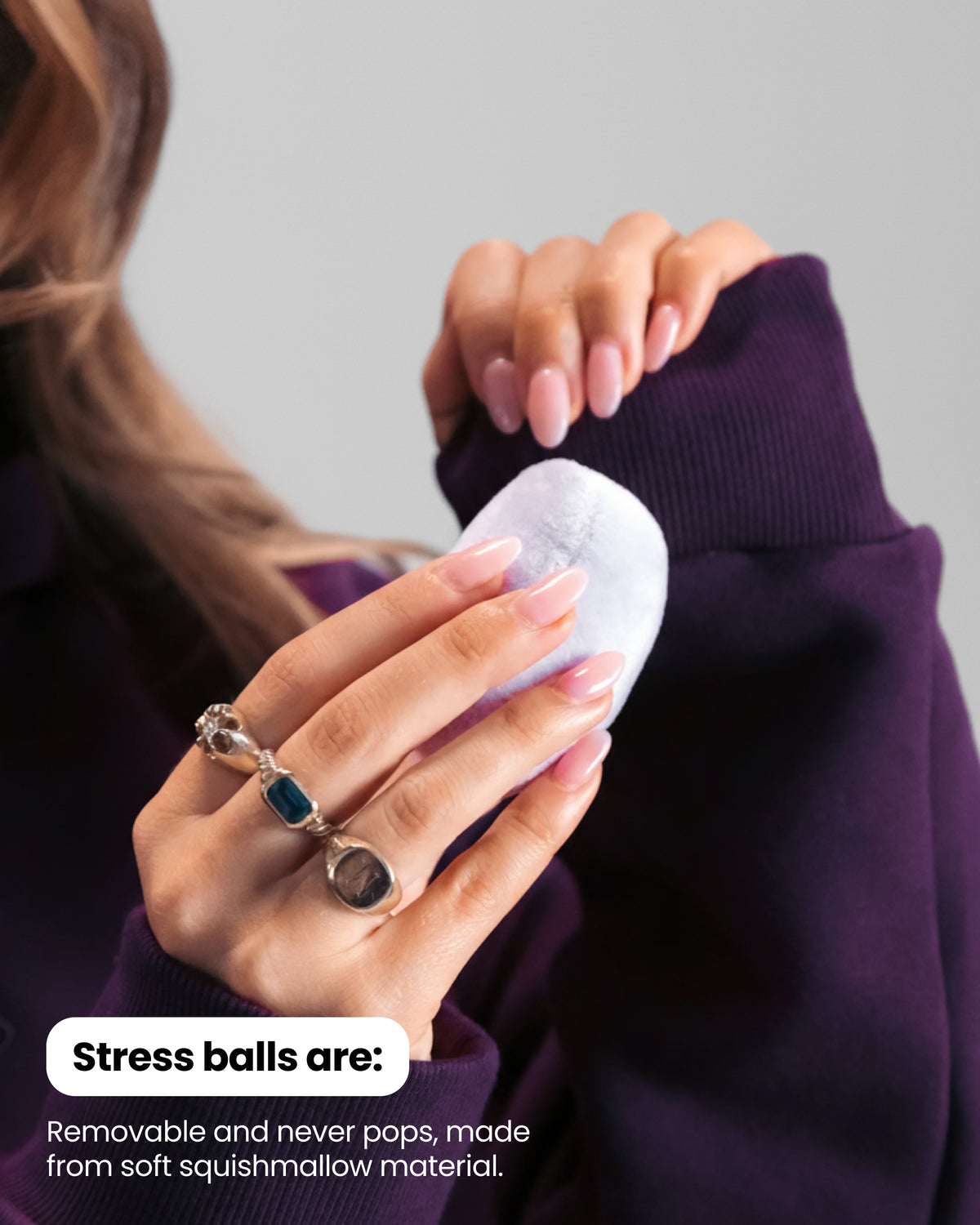
That shift matters beyond any single product. It is part of a larger, kinder idea, that the ways people naturally regulate themselves deserve respect rather than correction. Cloud Nine builds clothes around exactly this idea, tucking quiet fidget tools into everyday pieces so support can travel with a person without being noticed. But the takeaway here is bigger than any one company. It is that restless hands are not always a sign something is wrong. Often, they are the sign that someone is working hard to stay present.